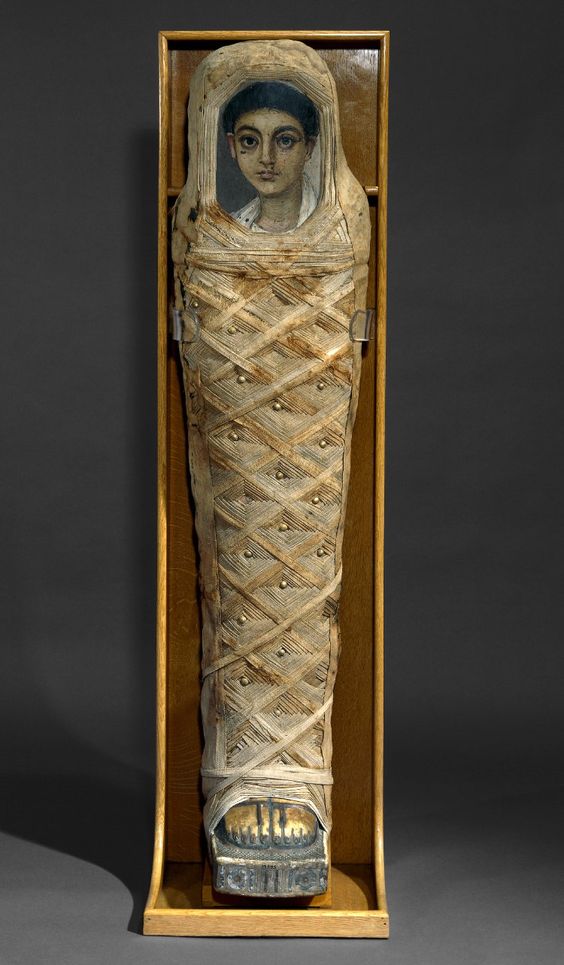
Hot wax oil painting, also known as Encaustic, is an ancient painting technique in Europe. It appeared in Greece in the fourth century B.C. and wax dyeing in Qin and Han Dynasties in China is also a kind of wax painting. In the Louvre in Paris and the British Museum in London, there are well-preserved wax-painted portraits of Egyptians around the second century A.D., and after more than 2,000 years, the colours and surfaces are well preserved, unlike oil paintings, which have the fears of falling off, discolouring and cracking. The Khobts used wax-painted shrouds, although the basement linen has become fragments. But the local color is still very beautiful and amazing.
This technique was lost in the Middle Ages, and it was not until the nineteenth century that some Romantic painters revisited wax painting materials, such as the famous Swiss painter Arold Bocklin 1827-1901, whose works were painted in wax. Modern painters such as Picasso also use wax painting to complete their works. Hot wax oil painting is mainly composed of beeswax, oil painting color and reinforcement, which solves the problems of discoloration, cracking and shedding of oil painting works over the years. Hot wax oil painting works of art do not change color, crack, fall off, can be preserved for a long time, never change color.